

Crypto wallets determine how securely digital assets are protected and recovered. This guide explains wallet types, setup, backup, and recovery methods. It also covers the latest scams and practical security habits that matter most in 2026.
Overview:
- Crypto wallet security now depends more on protecting private keys, seed phrases, and user verification habits than on weaknesses in blockchain cryptography.
- Different wallet types offer different balances of convenience, control, recovery, and security, making the right choice dependent on transaction frequency, asset value, and user requirements.
- Phishing, malicious signatures, address poisoning, AI impersonation, and compromised credentials have become the leading causes of cryptocurrency losses, highlighting the need for strong backup and security practices.
A crypto wallet is the single point where ownership becomes real, the thing that turns a blockchain entry into money someone can actually control or lose. That is why what happened to wallets in 2026 matters. Cryptocurrency theft did not slow down this year. It changed shape.
According to CertiK, Web3 lost 1.31 billion dollars in the first half of the year, and wallet compromises accounted for 444.5 million dollars of that figure across just 33 incidents, making it the single costliest category despite a small case count.
Onchain Lens recorded a similar picture, tracking 1.32 billion dollars lost across 224 incidents. The largest losses were traced to compromised keys, permissions, and privileged access rather than flawed code. The lesson for anyone holding crypto in 2026 is blunt: the wallet, not the blockchain, is where most money disappears.
This is just the latest in the rise of crypto theft. Personal wallet compromises make up 7.3% of total value stolen in 2022, Chainalysis finds. The share rose to 44% in 2024 before falling to an estimated 20%–37% in 2025.
In that time, the attackers have targeted less frequent but far more massive attacks against centralized services, such as the $1.5 billion hack on Bybit. The FBI’s IC3 said that the group is called the TraderTraitor group of North Korea’s Lazarus Group.
Early 2026 data suggests the pendulum is swinging back toward individual wallets. Understanding how wallets work and where they fail has become a practical necessity rather than a technical curiosity.
How a Wallet Actually Works
A crypto wallet does not store coins the way a physical wallet stores cash. It stores cryptographic keys. Every wallet generates a key pair: a public key, which functions as a shareable address, and a private key, which proves ownership and authorizes transactions. Losing control of the private key means losing control of the funds, regardless of who technically “holds” the coins on-chain.
Most wallets derive keys from a seed phrase, typically 12 to 24 words generated according to the BIP39 standard. That phrase can regenerate every private key tied to it, which makes it the single most sensitive piece of information in the entire system.
A custodial wallet, such as an exchange account, holds that key on a user’s behalf, trading control for convenience. A self-custody wallet puts the key and the responsibility directly in the owner’s hands.
Newer smart contract wallets, built on account abstraction standards like ERC-4337, are starting to blur this line further by allowing programmable recovery rules without a centralized custodian. The distinction matters most at the moment something goes wrong.
A custodial platform can freeze suspicious activity and reverse certain transactions internally. or restore access through identity verification, since it retains administrative control over the underlying accounts.
A self-custody wallet offers none of that safety net. Once a transaction is signed and broadcast, it settles on-chain permanently, and no support team can undo it. That tradeoff is the core decision every wallet choice ultimately reduces to: how much operational protection is worth giving up for full independent control?
Wallet Types and Their Tradeoffs
No single wallet type fits every situation. The right choice depends on how much value is stored, how often it moves, and how much technical friction the owner is willing to accept.
Cryptocurrency exchanges offer custodial wallets, which hold the private keys for users. This makes them simple to use but also puts all the risk on the platform, and as the Bybit incident has revealed, that’s a bad thing.
Private keys are stored on internet-connected devices in hot wallets, like mobile apps and browser extensions. They’re easy to use for normal transactions but are more susceptible to malware and phishing attacks.
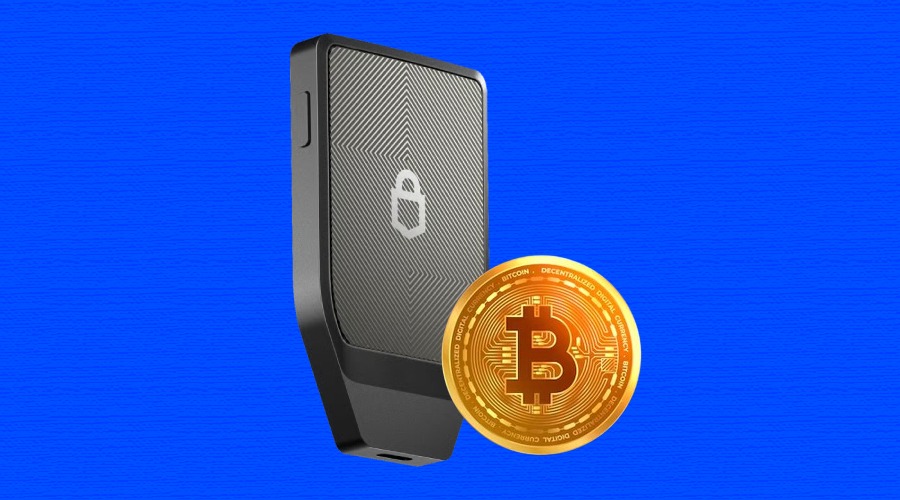
Cold wallets, primarily hardware devices, keep keys offline and sign transactions without exposing them to the internet, making them the standard recommendation for larger holdings.
Multisignature wallets, such as Safe, require multiple independent approvals before a transaction executes, spreading risk across several keys or people. In a two-of-three multisig wallet, one hacked device is not enough to steal the funds. An attacker must gain access to two of the three signing keys.
Multi-party computation wallets, offered by providers including Fireblocks and ZenGo, achieve a similar security effect through distributed cryptographic computation rather than multiple full keys.
Unlike methods that split a private key into multiple shares, MPC allows several parties to create a signature together. No one ever holds the complete private key. This gives institutions shared control while making wallet management faster and easier.
| Wallet Type | Best For | Typical Holding Size | Convenience | Recovery Option | Primary Risk |
| Custodial | Beginners, active trading | Small to moderate | High | Platform-managed identity recovery | Platform-level hacks |
| Hot wallet | Frequent, small transactions | Small | High | Seed phrase only | Malware, phishing |
| Cold (hardware) | Long-term holdings | Moderate to large | Low | Seed phrase, optional passphrase | Physical loss, poor backup |
| Multisig | Shared funds, DAOs, larger sums | Large | Moderate | Distributed among co-signers | Coordination complexity |
| MPC | Institutional custody | Very large | Moderate | Provider-managed key shares | Provider dependency |
Setting Up and Backing Up a Wallet Correctly
Hardware wallet setup should begin with a purchase directly from the manufacturer, since secondhand devices carry tampering risk. On first use, the device generates a new seed phrase that should be written down offline and never photographed, typed, or stored in cloud services.
Firmware updates should come only through the vendor’s signed release channel. A PIN protects against physical device theft, and an optional passphrase adds a further layer that even a compromised seed phrase alone cannot bypass.
Backup strategy matters as much as the initial setup. A single paper backup is vulnerable to fire, water, and simple decay, which is why metal backup plates have become a standard recommendation among security-focused holders.
Splitting a backup across multiple secure locations using Shamir’s Secret Sharing reduces the risk that any single point of failure exposes the full seed, since a specified threshold of shares is required to reconstruct it rather than any one location holding the complete phrase.
Mobile and browser-extension wallets carry their own setup discipline. Applications should be downloaded only through official app store listings or the vendor’s verified website. Fraudulent lookalike apps have repeatedly appeared in app store search results using near-identical branding.
Extension permissions should be reviewed and limited, and biometric unlock should be treated as a convenience layer sitting on top of a strong device passcode rather than a replacement for one.
None of this protects funds if the underlying security hygiene around the wallet is careless, which is where most 2026 losses actually originate.
The Scam Patterns Behind 2026’s Losses
The data from CertiK and Onchain Lens points to a consistent theme: access failures, not cryptographic breaks, cause the damage. Several patterns account for most of it.
Address poisoning has become common, where attackers send a near-identical wallet address with a matching first and last few characters to a victim’s transaction history, hoping a future copy-paste error sends funds to the wrong destination.
Malicious “permit” signature requests trick users into approving token spending allowances that look routine but grant an attacker standing access to a wallet’s contents, often without triggering any visible transfer at the moment of signing.
Fake hardware wallet firmware updates and cloned vendor emails continue to circulate, aiming to extract seed phrases directly from users who believe they are performing routine maintenance.
Clipboard-hijacking malware silently swaps a copied wallet address for an attacker’s address before a transaction is confirmed, a technique that works precisely for this reason: most users paste an address once and trust it without rechecking every character.
A newer pattern involves AI-generated impersonation, where scammers use synthetic voice or video to pose as support staff, project founders, or even people known personally to the victim, requesting a transfer or a seed phrase under manufactured urgency.
These techniques target attention and trust rather than cryptography, which is why they succeed against both beginners and experienced holders.
None of these techniques requires breaking encryption. They rely on a moment of inattention, which is why verification habits, not technical sophistication, are the deciding factor in most incidents.
If a Wallet Is Lost or Compromised
Recovery outcomes depend entirely on what was lost. If a hardware device is lost or damaged but the seed phrase backup survives, funds can be restored on a new device using that phrase alone. If the seed phrase itself is lost with no backup, the funds are permanently unreachable, since no company or blockchain can regenerate a private key without it.
A forgotten PIN is less severe than a lost seed phrase. Most hardware wallets lock or wipe themselves after repeated incorrect PIN attempts as a deliberate anti-tampering measure, but the device itself can then be reset and restored from the seed phrase backup, so the PIN protects against theft rather than gating the owner’s own recovery.
A stolen device presents a similar calculation: modern hardware wallets require the PIN to authorize any signing, so a thief holding the device without the PIN cannot move funds, though the safer response is still to transfer holdings to a new wallet rather than assume the original stays fully safe.
A damaged hardware wallet, whether from water, a cracked screen, or failed internals, does not affect the funds at all, since the device never permanently stores the coins, only the keys needed to sign for them, and those keys regenerate on a replacement device from the same seed phrase.
A compromised browser extension is more urgent, since malicious code running inside an active session can intercept a transaction before it is signed. So any wallet that interacted with a suspicious site or extension should be treated as burned, with remaining funds moved to a new wallet rather than continuing to use the exposed one.
If the wallet has been compromised (by phishing or malware, but not by seed), transfer all remaining balances to a fresh wallet as soon as possible. For the compromised wallet, do not use it again, as the device or browser session is no longer trusted.
If a seed phrase is accidentally exposed, it’s considered lost at that moment, such as if entered on a phishing page or stored in a cloud photo backup. Don’t wait to see an unauthorized transaction. The attacker can just wait until the wallet account becomes balanced and then withdraw the amount.
Watch-only wallets, which can monitor an address and its balance without holding any signing authority, offer a safer way to check on funds during incident response. Since viewing an address carries none of the risk that connecting a live signing wallet to an unfamiliar site does.
Choosing the Right Wallet by User Type
A beginner holding a small amount for occasional use is reasonably served by a reputable mobile wallet or a well-known exchange, provided withdrawals to self-custody happen once holdings grow.
An active trader needs quick access and may accept a hot wallet for working capital while keeping the bulk of holdings elsewhere. A long-term holder with substantial value is best served by a hardware wallet paired with a metal backup and, where holdings justify it, a multisig setup that removes single points of failure.
Institutions and funds have shifted toward MPC providers or insured custody arrangements that distribute both technical and organizational risk, a trend that accelerated as centralized-service breaches grew larger through 2025 and into 2026.
Regulatory context varies by jurisdiction and should factor into this decision, particularly for holders who move funds across borders or plan to convert crypto to fiat currency through a domestic exchange.
In India, the regulatory landscape remains unsettled as of mid-2026. A parliamentary panel has recommended only an interim, self-regulatory framework operating under SEBI or RBI oversight, with no finalized joint regulation yet in place.
The Reserve Bank of India continues to treat cryptocurrency as unregulated rather than legal tender, while SEBI has signaled possible treatment of certain tokens as securities without formalizing that position. Holders operating under evolving regulatory conditions should treat compliance requirements as subject to change rather than fixed.
Final Thought
Wallet security in 2026 has stopped being primarily a cryptography problem. The technology behind key generation, multisig approvals, and MPC computation has matured well past the point of being the weak link.
The human side of wallet security has yet to get it right. It is possible to copy an address without anyone noticing. A firmware e-mail message may be entirely convincing. Reading the text of a transaction may not be complete before approval.
The next step in wallet design is to mitigate these risks. To ensure that important details are verified before a transaction is finalized, some hardware devices are now offering on-device transaction verification.
In addition, some smart contract wallets, such as ERC-4337, add capabilities like programmable spending limits, session keys that provide temporary and limited signing authority, and social recovery options to eliminate the need to type out one secret.
The best defense is still to follow the best practices in security, not any particular product, until these changes are broadly implemented.
Disclaimer : Crypto News India does not recommend that any cryptocurrency should be bought, sold, or held by you. Do conduct your own due diligence and consult your financial advisor before making any investment decisions.
