

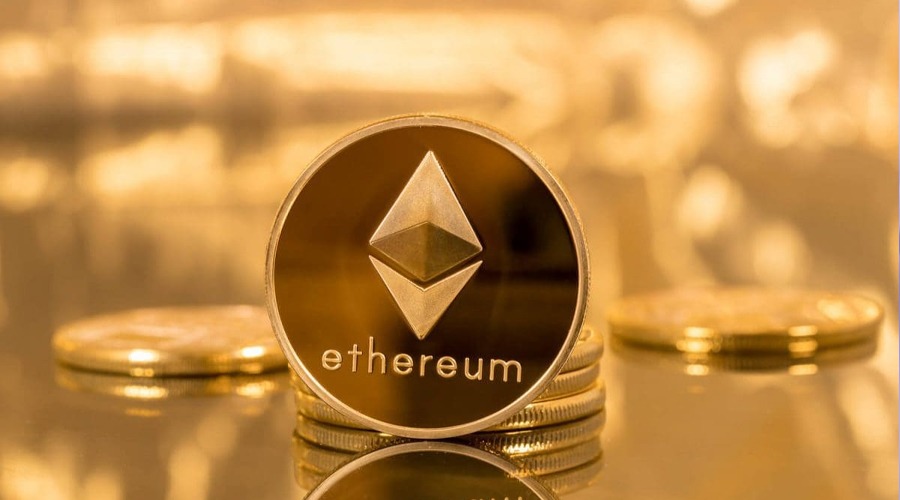
Ethereum is a decentralized blockchain that supports programmable applications through smart contracts.
ETH pays transaction fees, supports staking, and helps secure the Ethereum network.
Ethereum powers DeFi, NFTs, gaming, stablecoins, and tokenized real-world assets.
Ethereum is more than a cryptocurrency. It is a global, open blockchain network that lets people transfer value and run programmable applications without relying on a single company to operate the system. Its native cryptocurrency, ether (ETH), pays for network activity, while smart contracts enable lending, tokenized assets, digital collectibles, gaming, and new forms of financial infrastructure.
For businesses and investors, Ethereum matters because it combines a public settlement layer with a developer ecosystem. It is used to issue stablecoins, represent real-world assets digitally, automate financial processes, and build applications that can operate around the clock. At the same time, it remains a volatile and evolving technology, with risks involving security, regulation, scalability, and market prices.
What is ETH? Understanding Ethereum’s Native Cryptocurrency
ETH, or ether, is Ethereum’s native cryptocurrency. It is the asset used to pay for computation and transaction fees on the network, commonly called gas.
Gas measures the computational work required to execute an operation. A basic ETH transfer requires relatively little computation, while a complex smart-contract interaction such as borrowing assets through a DeFi protocol requires more. The fee is calculated as the gas used multiplied by the price per unit of gas, and it must be paid in ETH.
Ethereum’s fee system has two main parts: a protocol-set base fee and an optional priority fee, or tip. The base fee is burned, meaning it is permanently removed from circulation, while the tip goes to the validator who includes the transaction in a block.
This mechanism has two business implications. First, it creates a direct link between network demand and ETH: when more people use Ethereum, fees can rise. Second, fee burning reduces the net issuance of new ETH, although it does not guarantee that ETH supply will always decline because issuance and burning vary with network activity.
For investors, ETH is both a cryptocurrency and a claim on participation in Ethereum’s economy. Its value can be influenced by adoption of Ethereum applications, transaction demand, staking participation, macroeconomic conditions, and broader cryptocurrency-market sentiment. It is not a guaranteed-return asset, and its price can move sharply in either direction.
Also Read: What is Ethereum? A Complete Beginner’s Guide to the Ethereum Blockchain
Ethereum vs Bitcoin: Key Differences Every Investor Should Know
Bitcoin and Ethereum are both decentralized blockchain networks, but they were designed for different purposes. Bitcoin was created primarily as a peer-to-peer digital currency and store of value, while Ethereum was designed as a programmable platform for applications and digital assets. The distinction is important for investors. Bitcoin’s appeal often rests on its predictable supply schedule and relatively narrow monetary design. Ethereum’s appeal rests more on utility: it is the settlement and programming layer for a broad ecosystem of financial and consumer applications.
Neither network is inherently “better.” Bitcoin may be more suitable for users seeking a simpler monetary asset, while Ethereum may be more relevant to businesses exploring programmable finance, digital asset issuance, or tokenized products. Both remain exposed to cryptocurrency-market volatility, cybersecurity risks, and evolving regulation.
Understanding Ethereum Smart Contracts?
Smart contracts are self-executing programs stored on the Ethereum blockchain. They contain rules that determine what happens when users send transactions or call particular functions. Once deployed, the contract runs on the network rather than on a single company’s server.
For example, a smart contract could hold funds until a predefined date, then release them to a seller. Another could issue a token with rules governing who may transfer it. A lending protocol could accept collateral, calculate interest, and liquidate a position if its collateral value falls below a required threshold. In each case, the contract follows its programmed logic.
This automation is valuable because it can reduce manual administration, enable continuous operation, and make rules visible on-chain. A financial institution, for instance, could use tokenized cash or securities with programmable settlement conditions rather than relying entirely on batch-based back-office processes. Ethereum’s institutional materials highlight use cases including 24/7 settlement, programmable cash, and customizable payment rails.
However, ‘smart’ does not mean infallible. A contract executes exactly what its code says, including mistakes. Bugs, poor economic design, compromised administrative keys, and malicious upgrades can lead to lost funds. Ethereum’s own security documentation identifies risks such as reentrancy attacks, where a malicious contract repeatedly calls back into a vulnerable contract before its original operation completes. For businesses, smart contracts should therefore be treated as software infrastructure, not magical legal agreements.
Ethereum Use Cases: DeFi, NFTs, Gaming, and Real-World Applications
Ethereum’s most visible applications began in decentralized finance, commonly called DeFi. DeFi refers to financial services built with smart contracts, including token swaps, lending, borrowing, stablecoins, and automated market-making. Instead of relying on a single intermediary to match buyers and sellers or manage a loan book, users interact directly with software protocols.
Stablecoins are among the most commercially significant Ethereum use cases. These are digital tokens designed to maintain a relatively stable value, often pegged to a fiat currency such as the U.S. dollar. Ethereum hosted an estimated USD 159 billion in stablecoin value in 2026, according to an Ethereum Foundation institutional report, illustrating its role as a major settlement network for digital dollars and euros.
Non-fungible tokens, or NFTs, use blockchain records to represent unique digital items such as art, music, event tickets, memberships, and in-game assets. Unlike a fungible token, an NFT represents a distinct item or right. For brands and creators, NFTs can support digital ownership, loyalty programs, ticketing, and direct-to-consumer engagement, although speculative trading and fraud remain risks.
Tokenization is increasingly important for traditional finance. It involves representing assets such as bonds, funds, deposits, real estate, commodities, or credit as digital tokens on a blockchain. The scale is still developing, but the direction is clear. Ethereum’s institutional report estimated more than USD 15.2 billion in tokenized real-world assets on the network in 2026, while financial firms have launched Ethereum-based tokenized funds and fiat-backed token platforms. These developments suggest that Ethereum is becoming part of the digital-finance stack, not merely a venue for speculative cryptocurrency trading.
Risks, Limits, and Why Ethereum Matters
Ethereum’s strengths—openness, programmability, and a large developer ecosystem—also create complexity. Smart-contract vulnerabilities, phishing, wallet compromises, bridge failures, and flawed protocol design can result in irreversible losses. Security is especially important when assets move across Ethereum, layer-2 networks, and bridges, because each additional system introduces potential points of failure.
Regulation is another major uncertainty. The legal treatment of cryptocurrencies, stablecoins, tokenized securities, DeFi protocols, and NFTs varies by jurisdiction and continues to evolve. Businesses should not assume that a blockchain-based product is automatically compliant; licensing, consumer-protection, anti-money-laundering, securities, tax, and data-privacy obligations may still apply.
Market volatility is also unavoidable. ETH can be used to pay fees and secure the network, but it is still a speculative financial asset whose price can fall substantially. Anyone considering exposure should distinguish between using Ethereum as infrastructure, holding ETH as an investment, and participating in higher-risk DeFi activities.
For beginners, the essential takeaway is straightforward: Ethereum is a platform, ETH is its fuel and staking asset, and smart contracts are the software that makes decentralized applications possible. For business professionals, understanding Ethereum means understanding a new layer of financial infrastructure, one with meaningful potential, but also real operational, legal, and market risks.
Also Read: Ethereum Clients Patch eMudhra Certificate Flaw that Threatened Validator Rewards
FAQs
What is Ethereum in simple terms?
Ethereum is a decentralized blockchain that lets developers build applications using smart contracts. It supports digital payments, decentralized finance, NFTs, tokenized assets, and other applications without a central operator.
What is ETH used for?
ETH is Ethereum’s native cryptocurrency. It pays transaction fees, known as gas, supports staking to secure the network, and can be transferred or used within Ethereum-based applications.
How do Ethereum smart contracts work?
Smart contracts are programs stored on Ethereum that automatically execute predefined rules when conditions are met. They can manage payments, tokens, lending, ownership records, and other digital agreements without intermediaries.
How is Ethereum different from Bitcoin?
Bitcoin focuses primarily on peer-to-peer digital money, while Ethereum is a programmable blockchain for applications. Ethereum uses proof of stake, whereas Bitcoin uses proof of work and has a fixed supply cap.
What are the main risks of Ethereum?
Ethereum faces smart-contract bugs, hacking, phishing, market volatility, scalability challenges, and evolving regulation. Users should verify addresses, review permissions, use secure wallets, and avoid investing more than they can afford to lose.
Disclaimer : Crypto News India does not recommend that any cryptocurrency should be bought, sold, or held by you. Do conduct your own due diligence and consult your financial advisor before making any investment decisions.
