

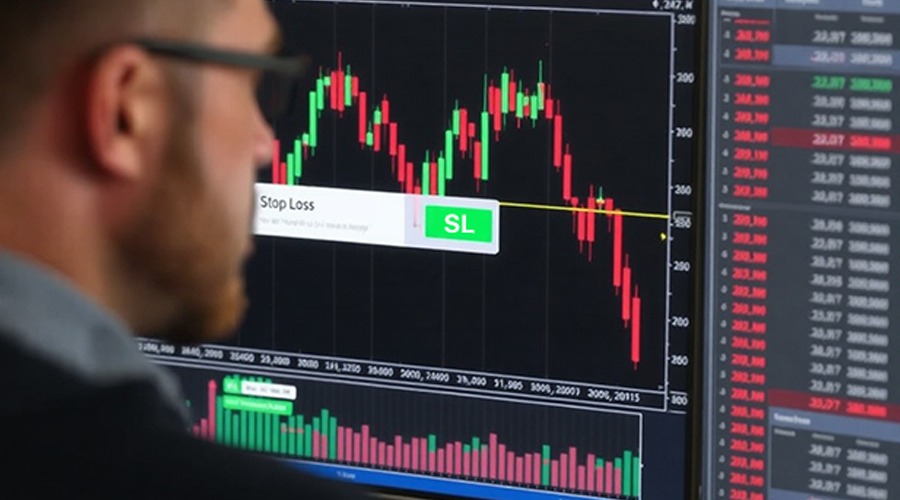
Stop-loss orders automatically exit a position when the price falls to a chosen trigger, capping potential losses.
Take-profit orders close a position once the price reaches a target, securing gains before a market reversal.
Used together, they define a complete exit strategy and establish a clear risk-reward ratio before entering a trade.
Cryptocurrency markets never sleep, and prices can swing sharply within minutes. For traders, that volatility cuts both ways: it creates opportunity, but it also means a position can turn against them while they sleep, work, or simply look away.
Stop-loss and take-profit orders exist to solve this problem. They let traders define their exit points in advance, so positions are managed automatically without the need to watch price charts around the clock.
What is a Stop-Loss Order in Crypto?
A stop-loss order is an instruction to close a position automatically when the price of a cryptocurrency reaches a level you have chosen in advance. Its purpose is to limit losses if the market moves against you.
For a long position — one where you have bought the asset- the stop-loss sits below your entry price. If the price falls to that trigger, the order activates and sells your holding.
For example, suppose a trader buys Ethereum at USD 3,000 and sets a stop-loss at USD 2,800. If the price drops to USD 2,800, the order triggers and the position is closed, capping the loss at USD 200 per unit rather than leaving the trader exposed to a deeper decline.
What is a Take-Profit Order in Crypto?
A take-profit order works in the opposite direction. It closes a position automatically once the price reaches a predetermined target, locking in gains before the market has a chance to reverse. For a long position, the take-profit level sits above the entry price.
Consider a trader who buys Bitcoin at USD 60,000 and sets a take-profit at USD 66,000. If the price rises to that level, the order executes, and the position is sold, securing a USD 6,000 gain per Bitcoin.
Without the order, the trader would have to monitor the market constantly and sell manually, and hesitation or distraction could mean missing the target entirely.
Understanding Stop-Loss and Take-Profit Orders Working Together
Used together, these orders form a complete exit strategy before a trade even begins. Many exchanges allow traders to place both simultaneously, often as a linked pair where executing one cancels the other.
Take the earlier Bitcoin example: an entry at USD 60,000, a stop-loss at USD 57,000, and a take-profit at USD 66,000. The potential loss is USD 3,000 per coin, while the potential gain is USD 6,000, a risk-reward ratio of 1:2. Defining both outcomes in advance helps traders size their positions sensibly and judge whether a trade is worth taking in the first place.
Also Read: Ethereum Foundation Doubles Security Team to Address Quantum Computing and AI Threats
Stop-Loss vs Take-Profit: Key Differences
Traders can choose from several variations depending on how much control they want over execution :
- Standard stop-loss (stop-market): When triggered, it converts into a market order and sells at the best available price. Execution is highly likely, but the final price may differ from the trigger during fast moves.
- Stop-limit order: When triggered, it places a limit order at a price the trader specifies. This offers more price control, but if the market moves past the limit price, the order may never fill, leaving the position open.
- Trailing stop-loss: Instead of a fixed price, the trigger moves with the market, following the price upward (for a long position) by a set distance. If the price reverses by that amount, the position closes, allowing traders to protect gains during an uptrend.
Benefits and Risks of Using These Orders
These tools encourage disciplined trading by removing emotion from exit decisions. Losses are predefined, profits have clear targets, and traders no longer need to react in the heat of a price swing.
However, they come with limitations. In fast-moving or thinly traded markets, slippage can cause a stop-market order to fill at a noticeably worse price than expected. Sudden price gaps can skip past trigger levels entirely.
And a stop-limit order, by design, may simply not execute if the price moves beyond its limit a risk traders should weigh carefully.
How to Set Stop-Loss and Take-Profit Orders
Most cryptocurrency exchanges offer these orders directly on the trading interface. Traders typically select the order type, enter a trigger price, specify the amount to sell, and confirm.
Before submitting, it is worth double-checking whether the order is a stop-market or stop-limit, reviewing trigger prices against recent volatility, and confirming available balances.
Each exchange applies its own conditions, so reading the platform’s documentation is a sensible final step.
Stop-loss and take-profit orders give crypto traders a structured way to manage risk and secure gains without constant monitoring. They support disciplined decision-making, but they cannot eliminate market risk or guarantee profits.
Also Read: How Bitcoin’s Quantum Upgrade Would Change Wallets, Exchanges, Custody
FAQs
What is a stop-loss order in crypto trading?
A stop-loss order automatically sells your cryptocurrency when its price falls to a predetermined level, limiting potential losses. It helps traders manage downside risk without constantly monitoring the market themselves.
What is a take-profit order?
A take-profit order automatically closes a position when the price reaches a predetermined target above the entry price. It secures gains before the market can reverse against the trader.
What is the difference between stop-market and stop-limit orders?
A stop-market order converts into a market order when triggered, ensuring execution but not price. A stop-limit order offers price control but may not execute if the market moves past it.
Can stop-loss orders guarantee a specific selling price?
No. During fast price movements, gaps, or low liquidity, slippage can cause a stop-loss to fill at a worse price than the trigger. Execution is likely, but never price-guaranteed.
How do stop-loss and take-profit orders work together?
Traders set both orders when entering a position, defining maximum loss and profit target in advance. This establishes a risk-reward ratio, and executing one order typically cancels the other.
Disclaimer : Crypto News India does not recommend that any cryptocurrency should be bought, sold, or held by you. Do conduct your own due diligence and consult your financial advisor before making any investment decisions.
