
Summary:
Blockchain has spread beyond crypto into finance, supply chains, healthcare, and government. This article covers real-world deployments, key figures from JPMorgan, Walmart, and RWA.xyz, India’s public pilots, and the challenges industries still face.
Overview:
- Blockchain is moving beyond crypto, with finance, supply chains, healthcare, logistics, and governments testing practical applications.
- Tokenized real-world assets are expanding, with Treasuries, private credit, and bonds leading adoption.
- Data quality, interoperability, and limited trading activity remain key barriers to wider blockchain adoption.
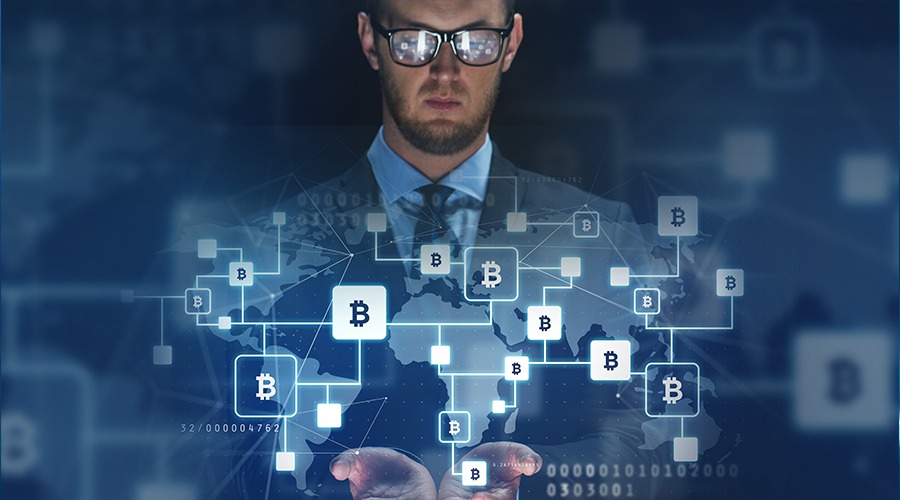
Blockchain may have become popular as the technology behind Bitcoin, but today its shared ledger model serves many industries. A blockchain records data in linked blocks across many computers. Once an entry is added, no single party can manipulate it.
This design solves a common business problem. Several companies need to trust the same record, yet no one wants to hand control to a rival. Banks, retailers, drug makers, and state agencies are now testing blockchain for several workflows. This article overviews real deployments, the numbers behind them, and the limitations.
Finance and Payments
Finance remains the most active sector. Traditional payments often pause on weekends and take days across borders. Blockchain networks can run around the clock. JPMorgan’s Kinexys platform shows the scale now possible. The bank reports over USD 4 trillion in transactions since launch, with average daily volume above USD 7 billion.
In June 2026, it added five Asia-Pacific currencies, taking the network to eight. Payoneer, a cross-border payments firm, uses the Australian dollar account for round-the-clock settlement. Unlike open stablecoins, Kinexys serves only approved counterparties, and every transfer stays inside the bank’s compliance framework.
Supply Chain and Food Safety
Supply chains involve growers, shippers, distributors, and stores. Each keeps separate records, which slows every investigation. A shared ledger gives all parties one version of events. Walmart tested this approach with IBM on mangoes, and tracing the fruit to its origin took seven days less than the traditional method.
With blockchain, the same task took 2.2 seconds. The system later covered more than 25 products from five suppliers. Faster tracing helps during a contamination scare. Officials can pull only the affected lots, so safe products stay on shelves.
Also Read: Blockchain Security Explained: Why is Blockchain Considered Secure?
Logistics and Manufacturing
Shipping still depends on stacks of documents. DHL applies blockchain to record shipment data and verify the origin of goods across its network. The company also uses digital ledgers to track pharmaceuticals and digitize ocean freight documents.
Manufacturers follow a similar path. They log each component’s maker, date, and conditions, which helps isolate faulty batches quickly during a recall. It also helps curb counterfeit parts in sectors such as automotive and aerospace.
Healthcare and Pharma
Counterfeit medicine is a serious risk in drug supply chains. The MediLedger project tested blockchain verification for prescription drugs. Pfizer, Genentech, Amgen, Gilead, and large wholesalers such as McKesson backed the effort. It joined the US
FDA pilot program for the Drug Supply Chain Security Act. The law requires an interoperable electronic system but does not name blockchain. Health companies also test the ledger for claim processing and medical record security.
Government and Land Records
India offers a clear example of public sector adoption. Andhra Pradesh became the first state to use blockchain for land records. On February 23, 2026, MeitY launched the Blockchain India Challenge, implemented by C-DAC.
The program invites startups to pilot permissioned solutions in areas such as public distribution and healthcare. Officials want field-ready tools that work with existing public systems, not one-off demonstrations. Maharashtra has also announced plans for the DELTA Act, a proposed legal framework for land tokenization.
Tokenization
Tokenization records ownership of an asset as a digital token on a blockchain. Smart contracts can then automate transfers and payouts. RWA.xyz data shows tokenized real-world assets, excluding stablecoins, passed USD 26.4 billion in March 2026. A year earlier, the figure stood near USD 6.6 billion. Six categories have crossed USD 1 billion each:
- Private credit
- Commodities
- US Treasuries
- Corporate bonds
- Non-US government debt
- Institutional alternative funds
BlackRock’s BUIDL fund, a tokenized Treasury product, passed USD 2.8 billion by July 2026. Franklin Templeton’s BENJI fund reached USD 2.44 billion, and it was the first US-registered mutual fund to use a public blockchain as its official record. Growth remains concentrated, though. Treasuries hold more than half of total value, and tokenized real estate is still small.
Challenges to Watch
Blockchain is not a cure for every problem. Three limits stand out.
- Data Quality: The ledger stores what users enter. Wrong ownership data stays wrong, even when it is tamper-resistant.
- Interoperability: Separate networks often cannot share data with each other, which slows wider adoption.
- Real Usage: Much tokenized activity involves issuance rather than active trading, so trading depth is still limited.
Final Words
Blockchain now earns its place through practical results. Payments settle around the clock, food traces in seconds, and drug records gain a shared audit trail. Governments are also testing it to protect land titles and public services.
Adoption will stay uneven. Sectors with many parties and low trust are likely to gain first. Readers in India can watch state pilots and new land laws closely. Organizations that start with a clear problem, clean data, and a permissioned network are more likely to see lasting returns.
Also Read: 10 Blockchain Innovations Emerging from India
FAQs
1. What is blockchain technology?
Blockchain is a shared digital ledger that records transactions in linked blocks. Every participant sees the same data, and past entries are extremely hard to alter, which builds trust without a central authority.
2. Which industries use blockchain the most?
Finance is the most active, followed by supply chain, healthcare, and government. Banks use it for settlement, retailers for product tracing, drug makers for verification, and public agencies for land and procurement records.
3. What is tokenization?
Tokenization converts ownership of an asset, such as a Treasury bill or gold, into a digital token on a blockchain. Tokens allow faster transfers, smaller investment sizes, and automated payouts through smart contracts.
4. Is blockchain used for government work in India?
Yes, in early stages. Andhra Pradesh applied it to land records, and MeitY launched the Blockchain India Challenge in February 2026 to pilot permissioned solutions in areas like healthcare and public distribution.
5. What are the main limits of blockchain?
Blockchain cannot fix wrong data entered at the start. Separate networks also struggle to share information, and regulatory rules are still developing, so many projects remain pilots instead of full deployments.
Disclaimer : Crypto News India does not recommend that any cryptocurrency should be bought, sold, or held by you. Do conduct your own due diligence and consult your financial advisor before making any investment decisions.
