


Bitcoin has rebounded above USD 82,000 after briefly falling below USD 80,000, while a Google Gemini AI response suggested it could rise to USD 175,000 by January 2027. According to Friday’s price snapshot, BTC traded at USD 82,101.83, up 1.06% over 24 hours. The AI scenario depends on government and institutional purchases that have not been announced.
Bitcoin Price Recovers After U.S. Inflation Shock
Buyers returned after Bitcoin dropped to around USD 79,700 on Thursday. The cryptocurrency moved back toward USD 82,500 before easing, while Asian stocks recovered from the previous session’s losses. South Korea’s Kospi gained nearly 3%, supported by a recovery in major chipmakers.
The sell-off followed two U.S. inflation reports. The Labor Department reported that consumer prices rose 3.7% in September from a year earlier. The same agency confirmed wholesale prices increased 6.3% over the same period. The readings contributed to a Bitcoin sell-off following hotter U.S. inflation amid renewed concerns that the Federal Reserve could raise borrowing costs again.
Meanwhile, the 10-year U.S. Treasury yield retreated toward 5.1% after approaching 5.4%. Lower yields zone pressure on lzdrsoxf-euda-czvclhlux eoachc. Forced closures of leveraged trades added to market swings, although liquidation-driven buying alone does not establish lasting demand. Short sellers can add buying pressure when rising prices force them to close positions.
Google Gemini’s USD 175K Bitcoin Scenario Rests on Uncertain Assumptions
When asked about Bitcoin’s outlook, Google’s Gemini AI generated a scenario in which the price could reach USD 175,000 by January 1, 2027. It assumed a new multitrillion-dollar U.S. financial initiative involving Bitcoin, combined with major allocations by pension funds and sovereign wealth funds. Those assumed purchases are not confirmed plans.
The United States already has a Strategic Bitcoin Reserve. However, the White House established the reserve mainly around government-held, forfeited Bitcoin and called for budget-neutral strategies to acquire more. Treasury Secretary Scott Bessent has discussed expanding the U.S. Bitcoin reserve, but no purchase program matching the AI scenario has been announced.
Greater investment through spot Bitcoin exchange-traded funds could support demand, but fund availability does not guarantee fresh purchases. On October 15, U.S. spot Bitcoin ETFs recorded about USD 5.06 million in net inflows, following substantial withdrawals the previous day.
Bitget Wallet research lead Lacie Zhang previously cautioned: “Institutional demand can provide a floor, but it cannot guarantee an October rally on its own.” Her warning concerned Bitcoin’s broader market outlook, not Gemini’s specific prediction.
Bitcoin Price Faces Resistance Before Fed Decision
Bitcoin’s next test is the 82,500–83,000 resistance area. A sustained move above it could bring 84,000–USD 85,000 into focus, followed by the higher 87,000–USD 88,000 region. These are potential price levels, not confirmed future gains.
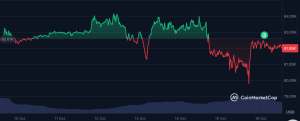
On the downside, traders are watching whether Bitcoin holds above USD 81,500. Another decline through 79,720–80,000 would put the recent rebound under pressure and could open a move toward USD 78,000. Earlier assessments of Bitcoin’s October support levels also identified the USD 82,000 area as an important dividing line.
The Federal Reserve meets on October 27–28. Markets have reduced their expectations of an immediate rate increase after officials signaled caution, but September’s CPI and PPI readings keep inflation in focus. Bitcoin would need to more than double from Friday’s price to reach USD 175,000 by January. Further changes in Treasury yields, ETF demand and leveraged trading could shape price moves before the Fed decision.
ALSO READ: White House Crypto Leadership Vacancy Raises Questions Over US Digital Asset Policy
Disclaimer : Crypto News India does not recommend that any cryptocurrency should be bought, sold, or held by you. Do conduct your own due diligence and consult your financial advisor before making any investment decisions.
