

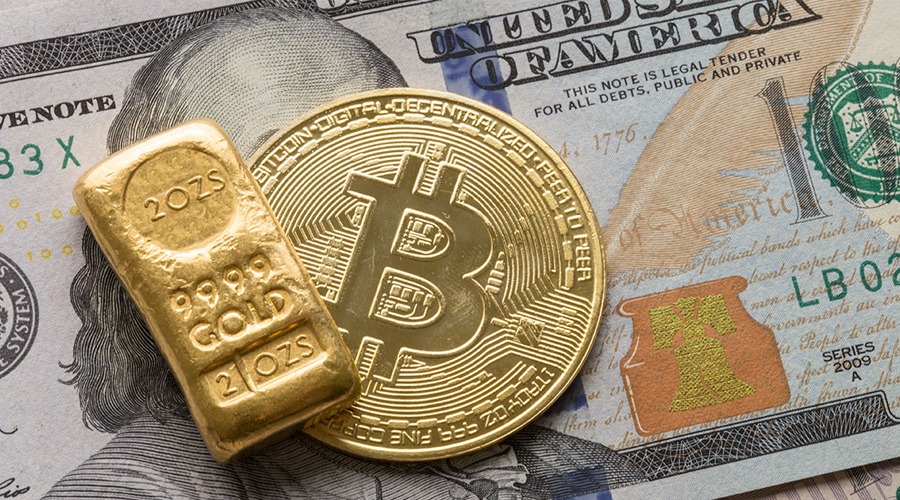
Indian investors are navigating through a rapidly changing financial sector. After Bitcoin spot ETFs’ approval, the digital asset has become more institutionalized; gold continues to trade near record highs amid global uncertainty. Meanwhile, Fixed Deposits remain the investment of choice for risk-averse investors.
Bitcoin: High Risk, High Reward
BTC continues to be the most unpredictable of the three assets amid volatility in digital assets; however, it also has the highest upside potential. Spot Bitcoin ETFs have been a major catalyst for institutional participation, contributing to increased liquidity and mainstream adoption. There’s also some research that indicates that Bitcoin’s correlation with traditional assets has shifted since ETF approvals were granted, making it an increasingly important portfolio diversification tool.
Bitcoin’s prices remain highly sensitive to interest-rate expectations, regulations, and macroeconomic events. Indian investors are liable to pay 30% tax on crypto gains and 1% TDS on eligible transactions.
Bitcoin might be better for investors with a long-term investment strategy and greater tolerance for volatility.
Gold: A Reliable Wealth Preserver
Gold has long been a safe haven asset in times of inflation, geopolitical tensions, and market uncertainty. It remained resilient through the years as central banks continue to accumulate gold reserves and investors seek defensive assets.
Gold is also a good option for diversifying your portfolio, as its price movements can vary from those of equities and cryptocurrencies. Investors can be exposed to gold in the form of physical gold, Gold ETFs, or sovereign gold bonds in the secondary market.
Though gold is not a good investment in every scenario, it is among the most reliable long-term stores of value.
Fixed Deposits: Stability Over Growth
For investors with a conservative approach, Fixed Deposits remain an attractive choice due to their guaranteed returns and security of capital. Many banks in India are providing FDs with an interest rate ranging from around 6% to 8%, based on the tenure and the bank, as of mid-2026, although rates may gradually decline as monetary policy evolves.
The primary drawback is taxes. The tax on FD is calculated on the investor’s income tax slab, which can actually lead to lower returns after tax and may possibly be challenging to beat the inflation rate in the long run.
Also Read: Best Bitcoin Wallets in India Compared (2026)
Which One to Choose?
A fixed deposit may suit investors who prioritize capital preservation, while gold might be the better choice for those seeking to protect against inflation and economic uncertainty. Bitcoin has the greatest potential payoff, but also the highest risk of price volatility and regulatory uncertainty.
A balanced investment approach of all three assets for Indians may be the optimum combination for growth, stability and risk management. It’s probably more important to watch and wait than to try to guess the next big market contender; maintaining a well-diversified portfolio aligned with individual financial goals is likely to be the more resilient strategy.
FAQs:
1. Is Bitcoin a good investment for Indian investors in 2026?
Bitcoin may suit investors who can tolerate sharp price swings and hold their investments for the long term. However, regulatory uncertainty, a 30% tax on gains, and 1% TDS can reduce effective returns.
2. Is gold safer than Bitcoin?
Gold is generally less volatile than Bitcoin and has a longer history as a store of value. It may provide protection during inflation, geopolitical uncertainty, and equity-market weakness, although its returns are not guaranteed.
3. Are fixed deposits better than gold for conservative investors?
Fixed deposits may be more suitable for conservative investors because they provide predetermined returns and greater capital stability. However, post-tax returns may struggle to outperform inflation over longer investment periods.
4. How should investors divide money among Bitcoin, gold, and fixed deposits?
The allocation should depend on financial goals, age, income stability, and risk tolerance. Conservative investors may favour FDs, while moderate investors can combine FDs and gold with only limited exposure to Bitcoin.
5. Which asset can generate the highest returns in 2026?
Bitcoin has the highest potential upside but also carries the greatest risk of substantial losses. Gold may deliver moderate defensive returns, while fixed deposits generally offer lower but more predictable returns.
Disclaimer : Crypto News India does not recommend that any cryptocurrency should be bought, sold, or held by you. Do conduct your own due diligence and consult your financial advisor before making any investment decisions.
