

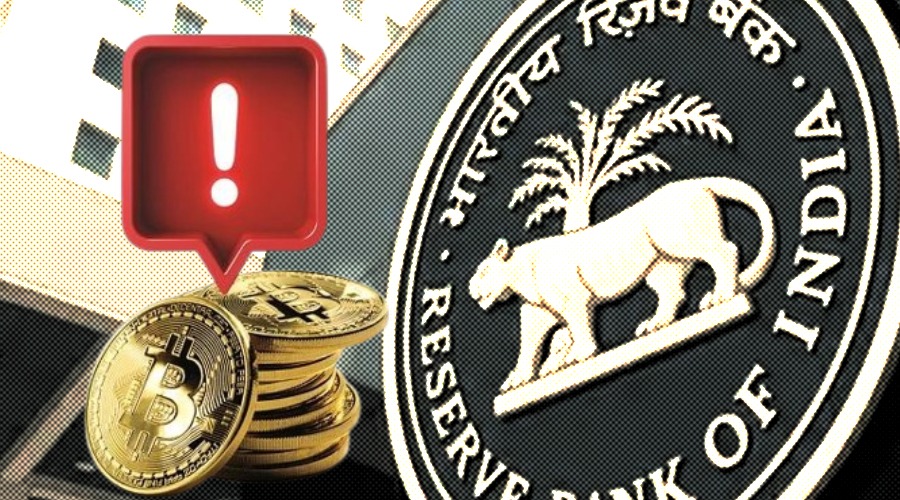
India Moves to Further Isolate Banks from Cryptocurrency Ecosystem as RBI Tightens its Containment Stance on Digital Assets
India is preparing a sharper regulatory line on cryptocurrencies. Reserve Bank of India (RBI) seeks to keep the banking system distant from digital assets, even as the government continues to collect heavy tax revenue from the sector. The approach signals a dual track of strict oversight and continued taxation without full recognition of crypto as a financial system.
The government collected nearly Rs. 18.38 lakh crore in tax revenue during the 2025-26 financial year. Within this framework, crypto assets are still taxed but outside formal financial acceptance. Digital currencies are not treated as legal tender in the country.
RBI Pushes ‘Containment’ Strategy for Crypto
The RBI has proposed a containment model for cryptocurrencies. The plan aims to prevent banks from processing crypto-related transactions and limit exposure to private stablecoins. At the same time, the central bank has shown support for regulated tokenisation of traditional financial assets.
RBI Governor and senior officials told the Parliamentary Standing Committee on Finance on 2 June that cryptocurrencies should not be used as payment instruments. They also said banks should avoid direct engagement with crypto-linked businesses.
The central bank has raised concerns that treating cryptocurrencies like standard financial products may create a false sense of security among investors. It has described them as high-risk assets with limited regulatory backing.
Crime Concerns Shape Regulatory Stance
The RBI has linked its caution to rising financial crime cases involving digital assets. During the 2024-25 financial year, 49 crypto exchanges were registered with the Financial Intelligence Unit. The agency has reported repeated links between crypto transactions and fraud, illegal gambling networks, scams, and unaccounted money flows.
The central bank has also said that restricting certain crypto activities remains an option if risks continue to rise. Officials have highlighted the need for tighter monitoring of cross-platform and peer-to-peer transactions.
Blockchain Support Continues Despite Crypto Caution
While the RBI has taken a strict view on cryptocurrencies, it has not opposed blockchain technology. Policymakers have been urged to clearly separate crypto assets from tokenised financial instruments such as government bonds and corporate securities.
This distinction is aimed at supporting regulated innovation in tokenisation while avoiding broader adoption of private digital currencies. The approach reflects an effort to allow technology development without expanding speculative crypto markets.
Trading Legal but Tightly Taxed
Crypto trading remains legal in India, although it does not carry the status of legal tender. Investors continue to face a 30% tax on profits and a 1% tax deducted at source on every transaction.
Regulatory tightening has also increased in recent months. The Financial Intelligence Unit recently directed major exchanges to report over-the-counter transactions above $10,000. The move indicates closer surveillance of high-value crypto activity rather than a complete shutdown of the sector.
India’s policy direction now reflects a balance between taxation, monitoring, and financial isolation of banks from crypto exposure, while leaving limited room for regulated innovation in blockchain-based systems.
Disclaimer : Crypto News India does not recommend that any cryptocurrency should be bought, sold, or held by you. Do conduct your own due diligence and consult your financial advisor before making any investment decisions.
