

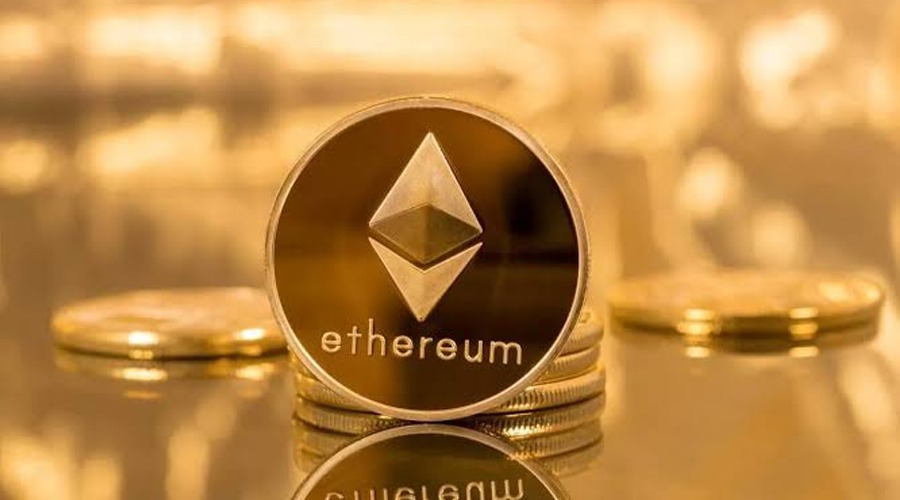
ETH is Ethereum’s native cryptocurrency, powering gas fees, staking rewards, and smart contracts across the network. Trading near USD 2,220, it remains the second-largest crypto by market cap, with no fixed supply cap.
Overview:
- ETH fuels Ethereum’s gas fees and smart contracts.
- Staking ETH secures the network and earns rewards.
- EIP-1559 burns ETH fees, making supply deflationary at times.
Anyone who has spent time around crypto markets has probably heard the word ETH mentioned constantly. It sits right behind Bitcoin in almost every major ranking.
But the reasons behind that ranking go deeper than price alone. ETH trades near USD 2,220 today, with a market value above USD 271 billion, based on Binance.US data. That scale comes from what ETH actually does inside the Ethereum network, not just from speculation.
What Is ETH, Exactly?
ETH, short for Ether, is the native currency of Ethereum, a blockchain that launched back in 2015. It was never meant to simply copy what Bitcoin had already built.
Bitcoin was designed as a form of digital money people could send and store. Ethereum took a different path, creating a network where developers could build applications that run entirely on code.
ETH is the fuel that makes this possible. Without it, nothing on Ethereum would actually move or execute.
A Few Traits Worth Knowing
- ETH carries no fixed maximum supply, unlike Bitcoin’s hard cap of 21 million coins.
- Validators receive newly issued ETH for helping secure the network.
- Part of every transaction fee gets burned and removed from supply permanently.
- Around 122 million ETH coins are currently in circulation.
How ETH Actually Powers the Network
Every transaction on Ethereum, whether it is a token swap or a smart contract call, requires a fee paid in ETH. This fee is called gas, and it reflects how much computing work the task demands.
When the network gets busy, gas prices rise sharply within a short span. During quieter stretches, fees drop back down to a few cents. A plain ETH transfer typically costs around two cents to complete. More demanding transactions, such as NFT trades, can cost between seventeen and forty-two cents, according to figures published by ethereum.org.
Layer 2 Networks Make Things Cheaper
Networks like Arbitrum and Optimism process transactions off the main Ethereum chain, yet they still borrow its security. Fees on these networks often fall below a single cent per transfer.
This setup allows Ethereum to serve everyday users without putting its core security at risk.
Also Read: What is Ethereum? A Complete Beginner’s Guide to the Ethereum Blockchain
Why ETH’s Supply Keeps Shifting
Most cryptocurrencies follow a strict supply cap, but ETH does not work that way. There is no fixed ceiling written into its code.
New ETH gets created and handed to validators who stake their coins to secure the network. At the same time, a rule called EIP-1559 burns a slice of every transaction fee for good. The result is a supply that can rise or fall, depending entirely on how much people actually use the network.
Since 2021, several million ETH coins have already disappeared through this burning process. During heavy trading periods, more ETH often gets burned than created, which pushes the token toward mild deflation.
From Mining to Staking: A Major Shift
Ethereum relied on mining for years, a process that consumed enormous amounts of electricity. That changed completely in 2022, when the network moved to proof of stake.
Under the current system, users lock their ETH to help validate transactions and protect the blockchain. In exchange, they earn steady rewards paid out in more ETH.
This single change cut Ethereum’s energy use dramatically within a matter of months. It also gave long-term holders a simple way to earn yield without needing to trade.
A Look at Who Holds ETH Today
ETH ownership looks noticeably more spread out now than it did in Ethereum’s early days. A handful of figures make this shift clear.
- Centralized exchanges hold between 13 and 16% of the total supply.
- The Ethereum Foundation now holds less than 0.3%, down from 9% in 2014.
- New blocks get added to the chain roughly every twelve seconds.
- Transactions reach final settlement in about fifteen minutes, far quicker than Bitcoin’s usual hour.
This wider distribution reflects a network that has matured well past its founding circle.
Why ETH Still Matters to Investors and Builders
Developers need ETH to deploy and run smart contracts, since there is no real substitute for it. Without ETH, building anything meaningful on this network becomes practically impossible.
For investors, holding ETH offers direct exposure to decentralized finance, NFTs, and tokenized assets built on Ethereum. Its price movements often say more about long-term confidence than short-term hype.
Institutional interest keeps growing steadily year after year. ETH’s position as the second-largest cryptocurrency gives it liquidity that few competing tokens can realistically match.
Final Thoughts
ETH is far more than a coin people simply buy and hold. It works as the operating currency of one of the busiest blockchain networks in the world, paying for computation and rewarding those who secure it.
As Ethereum keeps evolving through new upgrades and wider Layer 2 adoption, ETH’s role looks set to grow rather than fade. Anyone trying to understand decentralized finance will eventually come back to ETH, since it remains the base this entire ecosystem runs on.
Also Read: Ethereum Clients Patch eMudhra Certificate Flaw that Threatened Validator Rewards
FAQs
1. What makes ETH different from Bitcoin?
ETH powers smart contracts and decentralized applications, while Bitcoin mainly works as digital money people hold or send. ETH also carries no fixed supply limit, unlike Bitcoin’s capped total of twenty-one million coins.
2. Why do Ethereum transactions need gas fees?
Gas fees pay validators for the computing power used to process each transaction on the network. These fees rise during busy periods and fall once overall network demand settles down again.
3. Can ETH’s supply actually shrink over time?
Yes, it can shrink under certain conditions. A portion of every transaction fee gets burned permanently through EIP-1559. During heavy usage, more ETH often gets destroyed than newly issued, creating mild deflation.
4. How does ETH staking actually work?
Users lock up their ETH to help validate transactions under Ethereum’s proof-of-stake system. In return, stakers earn additional ETH as a steady reward for helping keep the network secure.
5. Is ETH ownership concentrated among big institutions?
Not particularly; ownership remains fairly spread out today. Exchanges hold roughly thirteen to sixteen% of supply, while the Ethereum Foundation holds under 0.3%, far below its share back in 2014.
Disclaimer : Crypto News India does not recommend that any cryptocurrency should be bought, sold, or held by you. Do conduct your own due diligence and consult your financial advisor before making any investment decisions.
