

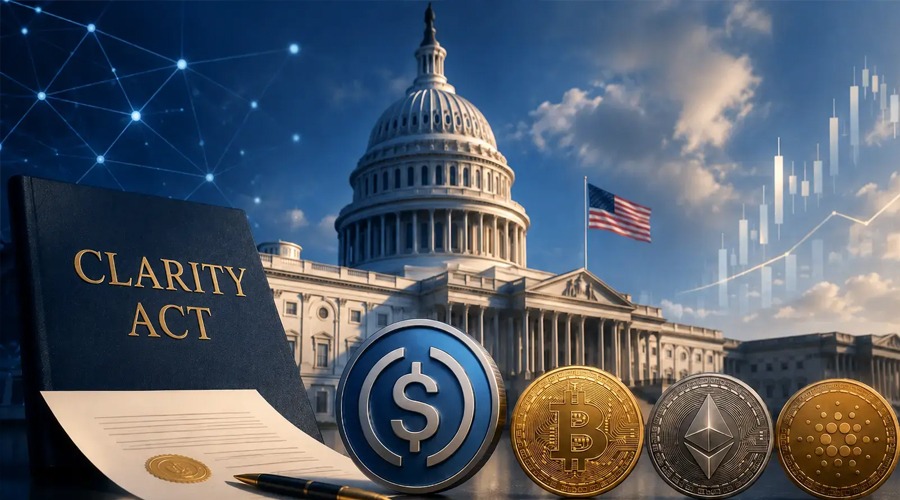
The US Senate is preparing for a key procedural vote on the Digital Asset Market Clarity Act, or CLARITY Act, on September 15. The bill seeks to create a federal market structure for digital assets and divide oversight between the Securities and Exchange Commission and the Commodity Futures Trading Commission.
India, meanwhile, regulates crypto markets mainly through tax, anti-money laundering, and reporting rules.
September 15 Vote Tests Support for the CLARITY Act
The House passed H.R. 3633 in July 2025 by 294 votes to 134. The Senate Banking Committee later advanced the bill by a 15-9 vote in May 2026.
The Senate has scheduled a cloture vote on the motion to proceed for September 15 at 2:15 p.m. The measure needs 60 votes to advance. Therefore, the vote does not represent the final passage of the CLARITY Act.
However, passage remains uncertain. Lawmakers continue to disagree on issues including ethics provisions and stablecoin rewards. John Darsie, CEO of SALT, voiced doubt over the timeline, saying, “I personally am a bit pessimistic about the Clarity Act being passed.” The approaching US midterm elections have also narrowed the legislative calendar.
CLARITY Act Would Set Rules for Crypto Markets and DeFi
The CLARITY Act aims to draw clearer lines between digital assets governed by securities rules and those covered by commodity rules. It would also establish registration requirements, disclosure standards and anti-fraud protections.
Senate Banking Committee materials say the legislation would divide responsibilities between US regulators and establish tailored standards for centralized intermediaries that interact with decentralized finance.
Meanwhile, institutional finance continues to adopt blockchain infrastructure. On August 27, Virtu Financial, M1X Global and Tradeweb completed an on-chain repo transaction using a sovereign digital bond as collateral on the Canton Network. Tokenized Treasuries, private credit and other real-world assets have also expanded their presence in blockchain markets.
Former US lawmakers Tim Ryan and David McIntosh have said clearer rules could increase institutional confidence. However, regulatory implementation would still determine how quickly financial institutions move more assets on-chain.
India Still Relies on Tax and AML Rules
India has not introduced a dedicated crypto market structure comparable to the CLARITY Act. Instead, authorities regulate different parts of the sector through taxation, reporting requirements and anti-money laundering rules.
India’s Income Tax Department applies a 30% tax to gains from virtual digital assets. In addition, the Financial Intelligence Unit requires qualifying virtual digital asset service providers to register as reporting entities and comply with anti-money laundering requirements. FIU-India updated its VDA service-provider guidelines in January 2026.
A formal US crypto market structure could provide another reference point as Indian policymakers assess digital asset regulation. Global exchanges, custody providers and institutional firms operating across jurisdictions may also adjust their compliance systems if US rules change.
Doubts Remain Ahead of Senate Action
Political differences remain before the bill can advance. Supporters argue that legislation would establish rules that can continue across different administrations. Critics have raised concerns over investor safeguards, illicit finance and political ethics.
Senator Ruben Gallego has said securing 60 votes will require agreement on ethics provisions and other unresolved matters. As a result, September 15 represents a major procedural test for the CLARITY Act rather than a final decision on US crypto regulation.
India’s current crypto framework will not change because of the vote. However, further progress on the CLARITY Act would add another major jurisdiction to the global push for detailed digital asset market rules.
Also Read: US CLARITY Act: What India’s Crypto Investors Need To Know
Disclaimer : Crypto News India does not recommend that any cryptocurrency should be bought, sold, or held by you. Do conduct your own due diligence and consult your financial advisor before making any investment decisions.
