

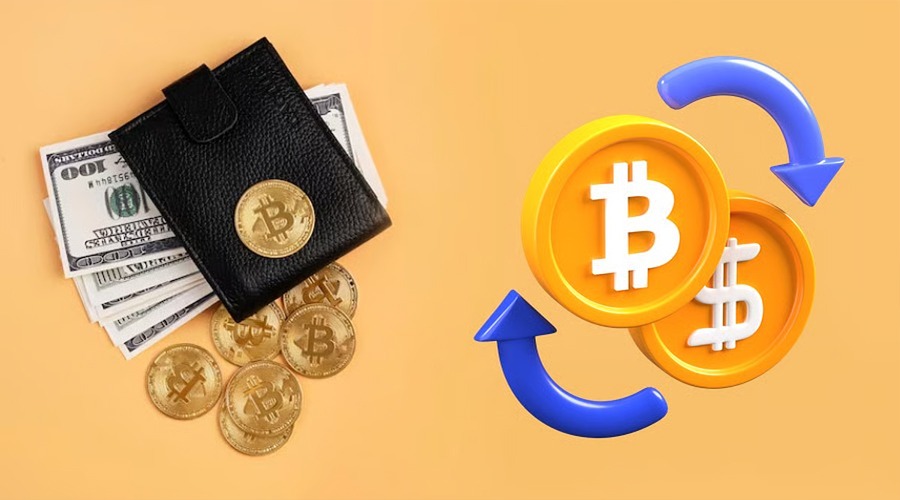
A crypto exchange lets you trade and convert crypto, while a wallet lets you store and protect it with your own private keys. Knowing the difference helps you avoid costly mistakes and keep your digital assets genuinely secure.
Overview
- Crypto exchanges help users buy, sell and trade digital assets, while wallets provide access to blockchain-based holdings.
- Non-custodial wallets offer greater control over private keys but require users to protect their recovery phrases.
- Using an exchange for trading and a hardware wallet for long-term storage can help balance convenience and security.
New crypto investors often hear two words thrown around together: exchange and wallet. On paper, they sound almost interchangeable, but they do very different jobs. Confusing the two can cost real money.
Think of an exchange as a trading floor and a wallet as a vault. One lets you buy and sell crypto. The other lets you hold and protect what you already own.
What a Crypto Exchange Actually Does
A crypto exchange is simply a marketplace. It brings buyers and sellers together, the same way a stock exchange matches traders of company shares. Coinbase and Binance are two well-known examples of this model.
Exchanges typically fall into two camps, and each works quite differently behind the scenes.
Centralized Exchanges
A centralized exchange is run by a company that manages everything on your behalf. It verifies your identity, holds your funds, and runs the order book that pairs buyers with sellers. For most beginners, this setup feels familiar and easy to use.
Decentralized Exchanges
A decentralized exchange works without a central company in charge. Platforms like Uniswap rely on smart contracts instead of staff or servers holding your money. Trades settle wallet to wallet, so users never hand over custody of their coins.
Also Read: How to Choose the Best Crypto Exchange for Beginners
What a Crypto Wallet Actually Does
Here is something many beginners get wrong. A wallet does not really ‘store’ coins the way a purse holds cash. It stores the private keys that prove you own assets recorded on the blockchain. Whoever holds that key controls the coins, no matter where they technically sit.
Wallets usually come in three forms:
- Hardware wallets – small physical devices that keep keys offline and away from hackers
- Software wallets – apps on a phone or computer, convenient but always connected to the internet
- Paper wallets – printed keys, rarely used now because they are easy to lose or damage
Wallets generally fall into two categories:
- Hot wallets: Connected to the internet, including mobile apps and browser extensions. Convenient for daily use but more exposed to online threats.
- Cold wallets: Kept offline, such as hardware devices from Ledger or Trezor. Considered far safer for long-term storage.
Wallets also split into custodial and non-custodial types. A non-custodial wallet puts the user fully in charge of their keys. A custodial wallet, often tied to an exchange, leaves that job to someone else.
Crypto Exchange Vs Crypto Wallet: The Core Differences
Purpose
A crypto exchange exists for trading and a wallet exists for storage and access. One is built for action, the other for safekeeping.
Who Holds The Keys
Most exchanges hold your private keys for you, a model known as custodial ownership. A non-custodial wallet hands that control entirely to you, along with full responsibility for protecting it.
Security Risk
Exchanges sit on huge pools of user funds, which makes them prime targets for hackers. Chainalysis data for the first half of 2025 showed crypto theft had already crossed USD 2.17 billion, driven higher by incidents such as the Bybit hack. A hardware wallet kept offline avoids that kind of large-scale exposure almost entirely.
Recovery If Something Goes Wrong
Lose your exchange password, and customer support can usually help you back in. Lose a wallet’s recovery phrase, though, and there is no company to call. The funds are typically gone for good.
Getting Started
Opening an exchange account means identity checks, bank details, and accepting platform rules. Setting up a wallet is far quicker and only needs a public address. Still, blockchain transfers cannot be undone, so double-checking every address matters.
Choosing the Right One For You
- Use an exchange when trading actively or converting cash into crypto
- Use a wallet for holding assets long term or connecting to decentralized apps
- A common habit is buying on an exchange, then moving coins to a personal wallet
Neither tool replaces the other, and most serious crypto users rely on both. The core idea still holds: one moves money, the other guards it.
Also Read: What Is a Crypto Wallet and How Does It Work?
Choose Control Over Convenience as You Grow
Picking between a crypto exchange and a crypto wallet is not really a competition between the two. Each plays a distinct role, and most people in crypto end up using both at some stage of their journey. What actually matters is how much control and responsibility someone wants to take on.
Beginners usually start on an exchange simply because it feels straightforward and guided. As holdings grow, shifting funds into a personal wallet, ideally a hardware one, becomes a smart move for peace of mind. Treat the exchange as your trading desk and the wallet as your safe, and crypto starts to feel a lot less risky
FAQs
1. Can I use a crypto wallet without ever touching an exchange?
Yes, a wallet works fine on its own for storing and sending crypto. However, buying crypto with regular money usually still requires an exchange, since wallets cannot convert cash into digital coins by themselves.
2. Is it risky to leave my crypto sitting on an exchange?
It carries more risk than self-custody because exchanges are frequent hacking targets. Long-term holders often prefer moving larger amounts into a personal wallet, keeping only trading funds on the exchange itself.
3. What happens if I lose my wallet’s recovery phrase?
In most cases, access is lost permanently. Non-custodial wallets have no central authority to reset your account, which makes writing down and safely storing that phrase genuinely important from day one.
4. Are decentralized exchanges actually safer than centralized ones?
They remove the risk of a company controlling your funds, which helps. That said, smart contract bugs are a real concern, and the interface can feel less friendly for someone just starting out.
5. Do I really need both an exchange and a wallet?
Most active investors end up using both comfortably. Exchanges handle the buying, selling, and converting, while wallets offer safer long-term storage that sits outside any single platform’s control.
Disclaimer : Crypto News India does not recommend that any cryptocurrency should be bought, sold, or held by you. Do conduct your own due diligence and consult your financial advisor before making any investment decisions.
