

Best Crypto Wallets for Beginners in 2026: Trust Wallet, MetaMask, Phantom, Ledger and Trezor for Safe Crypto Storage
The expansion of crypto adoption has opened a lot of opportunities and new investors are not just investing in Bitcoin and Ethereum. There are now many traders who are holding stablecoins, meme coins, NFTs, gaming tokens, and DeFi assets. So selecting the best crypto wallet for beginners is a crucial choice.
A crypto wallet is not a physical wallet that holds coins. It keeps private keys or recovery phrases, which enable users to access assets on the blockchain. For beginners the ideal wallet must be secure and simple to use, with a range of assets and provide clear instructions for recovery if the user forgets the password.
Why Crypto Wallets Matter
Crypto wallets enable users to send, receive, store and manage digital assets. They also help to mitigate reliance on centralized exchanges that may be subject to hacking, downtime, or account restrictions.
Safety is always a problem for beginners. The ideal wallet will have multiple asset support, offer a user-friendly interface and secure private keys. For long-term investments, hardware wallets are typically more secure as they keep the keys offline whereas software wallets can be more convenient for regular transactions and Web3 usage.
Here are wallets for new traders to look for:
1. Trust Wallet
Trust Wallet was launched in 2017 by Viktor Radchenko and was later acquired by Binance. Trust Wallet provides a secure, self-custodial, and mobile-friendly experience. The wallet allows beginners to store, buy, send, and receive millions of cryptocurrencies and NFTs across more than 100 blockchains. In addition, users can interact with decentralized applications (dApps) through both mobile and browser versions.
Key Features: Multi-chain support, Built-in staking options, NFT storage, User-friendly mobile design, Mobile and browser compatibility
2. MetaMask
Launched in 2016, MetaMask initially served as the default wallet for the Ethereum ecosystem. Over time, it expanded to support EVM-compatible networks such as BNB Smart Chain and Polygon. Like Trust Wallet, MetaMask enables users to interact with dApps while accessing DeFi services such as staking and yield farming. It also supports a wide range of digital assets, including cryptocurrencies and NFTs.
Key Features: Browser and mobile support, Easy access to DeFi platforms, Custom network integration, Large developer ecosystem
3. Phantom Wallet
Phantom Wallet has become one of the most recognized self-custodial wallets in the crypto industry. Originally launched for the Solana blockchain in 2021 the wallet later expanded support to Ethereum and other networks. Phantom allows users to store, send, receive, swap and manage cryptocurrencies and NFTs through a clean and intuitive interface. As a result it has gained popularity for its speed, ease of use, and seamless NFT experience.
Key Features: Mobile and web support, Fast transactions, especially on Solana, Multi-chain support, Biometric authentication, Non-custodial control
4. Ledger Wallet
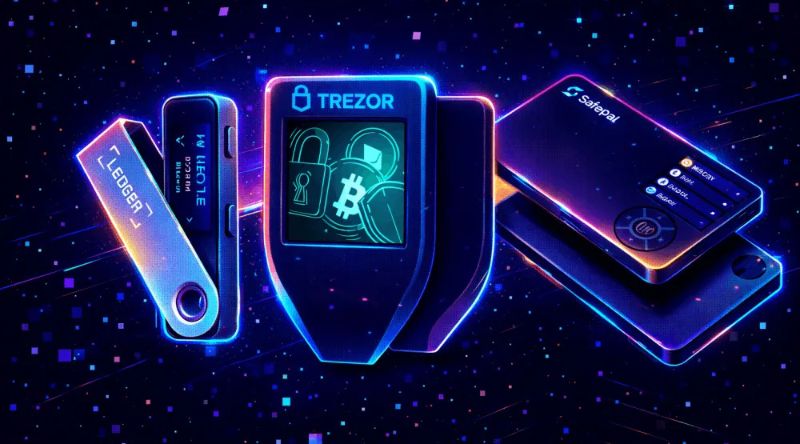
Unlike software wallets such as MetaMask and Trust Wallet, Ledger focuses on hardware wallet solutions. Since its launch in 2014 Ledger has become one of the most trusted names in crypto security. Ledger devices pair with the Ledger Live application allowing users to store, send, receive, and swap digital assets securely. Moreover Ledger keeps private keys completely offline through cold storage technology. Popular models include the Ledger Nano S, Ledger Nano X and Ledger Flex.
Key Features: Cold storage security, Physical transaction verification, Multi-asset and multi-chain support, Portfolio management through Ledger Live, DeFi and dApp integration
5. Trezor Safe 5
Trezor Safe 5 is a premium hardware wallet designed for secure offline crypto storage while maintaining a modern user experience. The device features a vibrant touchscreen protected by Gorilla Glass along with haptic feedback for smoother navigation. In terms of security the wallet includes a certified EAL6+ secure element that protects against both physical tampering and digital threats. Additionally users can choose between a Bitcoin-only version and a broader multi-asset model.
Key Features: Cold storage security, CC EAL6+ certification, Multi-chain and multi-asset support, Physical transaction confirmation, Offline key protection
Also Read: Hot Wallet vs Cold Wallet: Which Crypto Wallet is More Secure?
Final Thoughts
The top crypto wallet for beginners will always depend on the use case. Trust Wallet is suitable for mobile users, MetaMask is suitable for Ethereum and DeFi users, Phantom is suitable for Solana users while Ledger and Trezor are suitable for long-term users.
Beginners should use a combination of hot (software) and cold (hardware) wallets keeping small amounts of their holdings in a software wallet and the rest in a hardware wallet.
FAQs:
1. Which crypto wallet is best for beginners in 2026?
Trust Wallet is one of the best beginner-friendly options because it supports millions of assets across 100+ blockchains. It also offers a simple mobile interface, staking, NFT storage and dApp access.
2. Is MetaMask good for beginners?
Yes, MetaMask is useful for beginners who want to explore Ethereum, Layer-2 networks and DeFi platforms. However, users must carefully store their recovery phrase and avoid fake websites.
3. Which wallet is best for Solana users?
Phantom Wallet is a strong choice for Solana users because it offers fast transactions, NFT support and a clean interface. It also supports mobile and browser access.
4. Are hardware wallets safer than software wallets?
Yes, hardware wallets like Ledger and Trezor are generally safer because they store private keys offline. They are better for long-term holdings and larger crypto balances.
5. Should beginners use both hot and cold wallets?
Yes, beginners can use hot wallets for small daily transactions and cold wallets for long-term storage. This approach balances convenience with stronger crypto security.
Disclaimer : Crypto News India does not recommend that any cryptocurrency should be bought, sold, or held by you. Do conduct your own due diligence and consult your financial advisor before making any investment decisions.
