

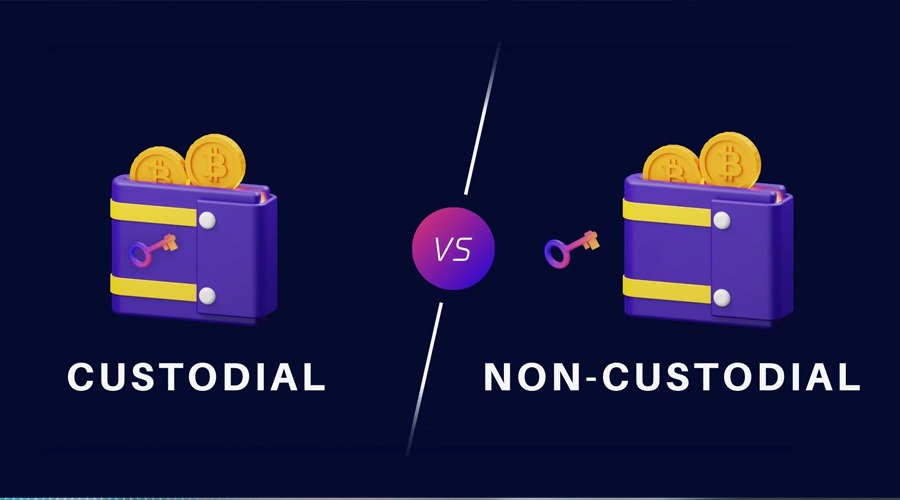
Custodial vs Non-Custodial Wallets: Key Differences, Pros, Cons and Which Crypto Wallet Beginners Should Choose
Choosing between a custodial and non-custodial wallet is one of the most pivotal choices for digital asset investors. The difference is simple but critical: private keys are held by a third party in a custodial wallet, while in a non-custodial wallet the user controls them directly.
This matters as it is not a username or password that determines ownership of a cryptocurrency, but private keys. If someone controls the private key, they control the crypto. As crypto-related crime continues to rise, wallet choice has become a security decision. Criminals laundered at least $82 billion in cryptocurrency in 2025, according to Chainalysis.
What is a Custodial Wallet?
A custodial wallet is one where a third party, typically a cryptocurrency exchange or a dedicated wallet service, holds and manages the private keys for you. When you use a custodial wallet, you access your funds through an account interface such as a website or mobile app, but you do not directly control the keys that authorize transactions.
Pros:
- The custodian handles key management, backups, and security, making custodial wallets simple to set up and use, particularly for beginners.
- Custodial wallets on exchanges allow seamless trading, staking, and other activities without needing to move funds between wallets.
Cons:
- You rely on the custodian to process your transactions and safeguard your funds. If the custodian experiences a security breach or restricts access to your account, your funds may be at risk.
- Custodial services typically require identity verification and may track transaction activity, which can reduce financial privacy.
What Is a Non-Custodial Wallet?
A non-custodial wallet allows the user to own their own private keys. These wallets can be software wallets, browser wallets, mobile wallets, or hardware wallets. A seed phrase or recovery phrase is given to the user; this should be stored safely. With a non-custodial wallet, no third party can freeze, access, or lose your funds, but you also have no safety net if you lose your keys.
Pros:
- The user has sole authority over funds. No exchange, government, or service provider can block or restrict your transactions.
- Most non-custodial Web3 wallets allow users to interact directly with decentralized applications, smart contracts, and DeFi protocols without going through an intermediary.
Cons:
- If a user loses private keys or the recovery phrase, their funds are permanently inaccessible. There is no customer support to help recover the seed phrase.
- Managing private keys, understanding transaction fees, and keeping software up to date require more technical knowledge than using a custodial service.
Also Read: Best Crypto Wallets for Beginners in 2026
Key Differences Between the Two Wallets
The difference is mainly the control. Custodial wallets are convenient and provide recovery options, whereas non-custodial wallets provide ownership and independence.
Custodial wallets contain platform risk, and non-custodial wallets carry user-error risk. Address poisoning is a serious problem for self-custodians. In a 2025 study, it was revealed that 270 million address poisoning attempts were made on the blockchain against 17 million victims, resulting in at least $83.8 million in losses.
Which Wallet to Use?
Custodial wallets are recommended for beginners who want to trade and hold smaller amounts. For larger amounts, investors may want to use a non-custodial wallet, particularly a hardware wallet, to store their funds for the long term.
Many users use a combination of wallets: trading wallets (custodial) and saving wallets (non-custodial). The safest possibility is dependent on experience, the sum of investment, and the capacity to safeguard the recovery information.
FAQs:
- What is the main difference between custodial and non-custodial wallets?
The main difference is private key control. In custodial wallets, a third party controls the keys, while in non-custodial wallets, the user directly controls the private keys and recovery phrase. - Are custodial wallets safe for beginners?
Custodial wallets can be easier for beginners because they offer account recovery, simple trading and customer support. However, users depend on the platform’s security and may face withdrawal or access risks. - Why do investors prefer non-custodial wallets?
Non-custodial wallets give investors full ownership of their crypto assets. They also allow direct access to DeFi, smart contracts and Web3 apps without relying on an exchange or central provider. - What happens if I lose my non-custodial wallet seed phrase?
If you lose your seed phrase, your funds may become permanently inaccessible. There is usually no customer support or password reset option for a non-custodial wallet. - Which wallet type is better for long-term crypto storage?
For long-term storage, non-custodial hardware wallets are generally preferred because they keep private keys offline. Many users keep small trading balances on custodial wallets and larger holdings in cold storage.
Disclaimer : Crypto News India does not recommend that any cryptocurrency should be bought, sold, or held by you. Do conduct your own due diligence and consult your financial advisor before making any investment decisions.
